Lars hat Brave New World von Aldous Huxley besprochen
5,0 stars
4.6
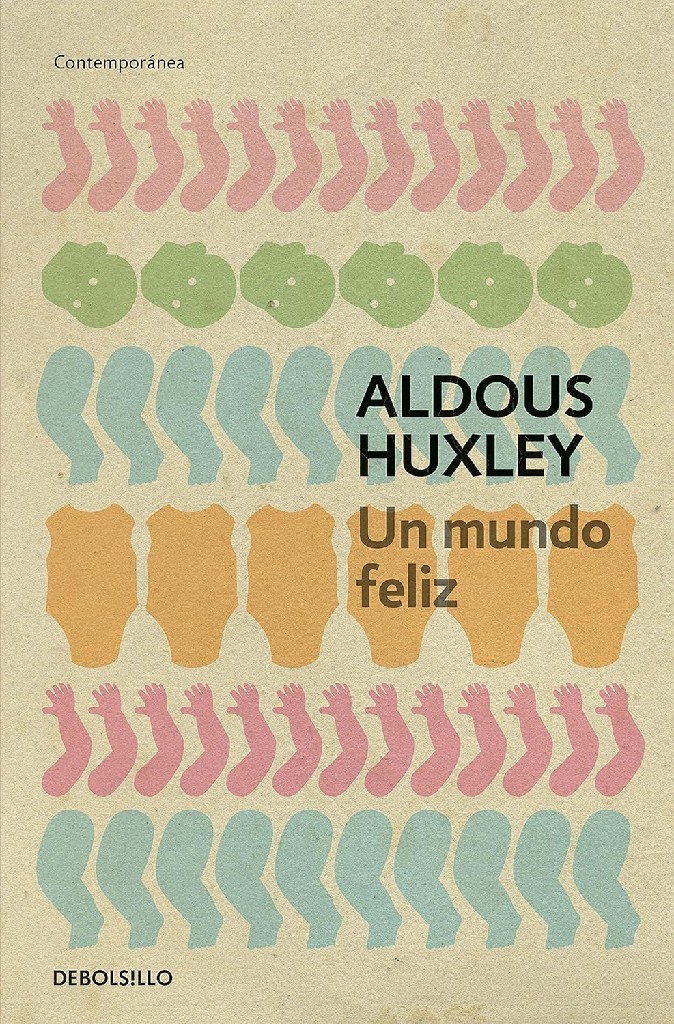
Brave New World is a dystopian social science fiction novel by English author Aldous Huxley, written in 1931 and published in 1932. Largely set in a futuristic World State, whose citizens are environmentally engineered into an intelligence-based social hierarchy, the novel anticipates huge scientific advancements in reproductive technology, sleep-learning, psychological manipulation and classical conditioning that are combined to make a dystopian society which is challenged by only a single individual: the story's protagonist. Huxley followed this book with a reassessment in essay form, Brave New World Revisited (1958), and with …
Brave New World is a dystopian social science fiction novel by English author Aldous Huxley, written in 1931 and published in 1932. Largely set in a futuristic World State, whose citizens are environmentally engineered into an intelligence-based social hierarchy, the novel anticipates huge scientific advancements in reproductive technology, sleep-learning, psychological manipulation and classical conditioning that are combined to make a dystopian society which is challenged by only a single individual: the story's protagonist. Huxley followed this book with a reassessment in essay form, Brave New World Revisited (1958), and with his final novel, Island (1962), the utopian counterpart. The novel is often compared to George Orwell's Nineteen Eighty-Four (published 1949). In 1999, the Modern Library ranked Brave New World at number 5 on its list of the 100 best English-language novels of the 20th century. In 2003, Robert McCrum, writing for The Observer, included Brave New World chronologically at number 53 in "the top 100 greatest novels of all time", and the novel was listed at number 87 on The Big Read survey by the BBC.Despite the above, Brave New World has frequently been banned and challenged since its original publication. It has landed on the American Library Association list of top 100 banned and challenged books of the decade since the association began the list in 1990.
Taschenbuch, 202 Seiten
Sprache: Spanish
Am 16. August 2003 von Debolsillo veröffentlicht.
4.6
Read in and for English class in school. Would likely not have read it on an other occasion, although the themes and things discussed are thought provoking, I didn't really enjoy the book.
I guess it might be the point of the book, but I couldn't feel that any character was real, everything felt stereotypical; while at the same time that "prediction" of the future does not seem plausible to me.
And I repeat, it might be the point of the book, so, if that is the case, then great job. I just did not enjoy it or gained any interesting insight.
Read this immediately afte reading the Orwell classic, 1984. I admit, I struggled reading this book. The method of story telling, with the switching of character perspective was difficult to follow. The idea of the book became far more clearer as the book progressed and became clear especially towards the end.
However the ideas presented in the book and their demonstration was thought provoking.
There is much to be learned from reading this book and it is easy to forget that it was written early in the last century, not this one. Sadly, the warnings Huxley offers about what society was becoming were largely ignored and we've come to a society that so closely mirrors his "civilization" that it could have been a metaphor about our current state of affairs written by a contemporary author.
It is a very short novel but full of warnings and lessons that are as applicable, or even more so, today as they were in 1930. It is a lesson in mass manipulation by the media and big pharma. It is a lesson in treating people ultimately as mere resource rather than persons. And it is a lesson in extremes, extreme pain v. extreme pleasure and the wrongheadedness in submitting to either.