Lars hat Brave New World von Aldous Huxley besprochen
5,0 stars
4.6
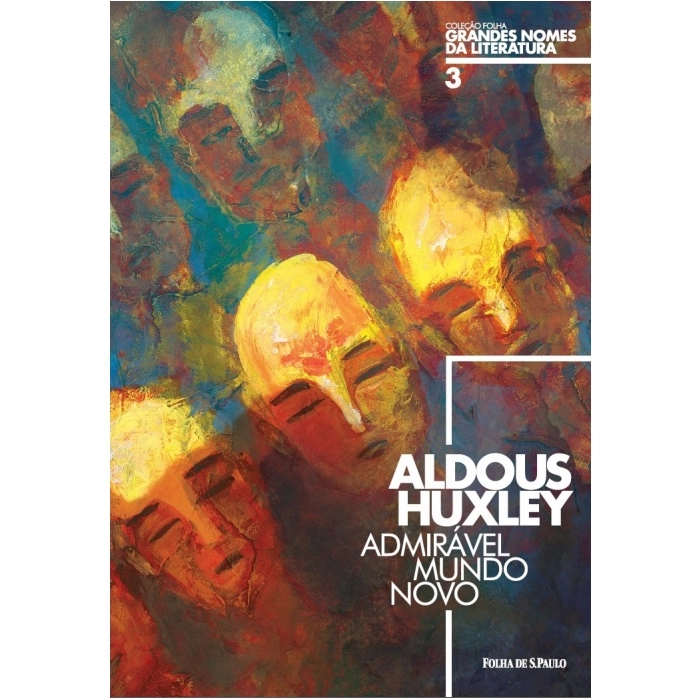
"Admirável Mundo Novo", do escritor britânico Aldous Huxley (1894-1963), lançado em 1932, exerceu uma influência extensa sobre a literatura de ficção científica que se seguiu – e os escritos de qualquer gênero que pretendam discutir o totalitarismo.
Huxley escreveu o livro em pouco mais de três meses, em 1931, quando passava o verão na França. Ele concebeu uma sociedade futurista distópica, dividida em castas e na qual os núcleos familiares não mais existem.
O escritor inglês é um nome crucial para o romance moderno. Segundo o colunista da …
"Admirável Mundo Novo", do escritor britânico Aldous Huxley (1894-1963), lançado em 1932, exerceu uma influência extensa sobre a literatura de ficção científica que se seguiu – e os escritos de qualquer gênero que pretendam discutir o totalitarismo.
Huxley escreveu o livro em pouco mais de três meses, em 1931, quando passava o verão na França. Ele concebeu uma sociedade futurista distópica, dividida em castas e na qual os núcleos familiares não mais existem.
O escritor inglês é um nome crucial para o romance moderno. Segundo o colunista da Folha Manuel da Costa Pinto, curador da coleção, "todos esses nomes e títulos permitem estabelecer confluências que mostram como a literatura moderna, do final do século 19 até a atualidade, se conecta por percepções compartilhadas da condição, das angústias e dos êxtases do indivíduo moderno."
"Ao mesmo tempo", segue comentando o curador, "cada um desses autores se reporta a obras e vultos que moldaram a face de suas respectivas literaturas, e que também se fazem presentes na Coleção Folha Grandes Nomes da Literatura, com traduções consagradas ou versões feitas especialmente para essa biblioteca pessoal dos leitores da Folha."
21 cm, 256 Seiten
Sprache: português
Am 17. April 2016 von Folha de S. Paulo veröffentlicht.
4.6
Read in and for English class in school. Would likely not have read it on an other occasion, although the themes and things discussed are thought provoking, I didn't really enjoy the book.
I guess it might be the point of the book, but I couldn't feel that any character was real, everything felt stereotypical; while at the same time that "prediction" of the future does not seem plausible to me.
And I repeat, it might be the point of the book, so, if that is the case, then great job. I just did not enjoy it or gained any interesting insight.
Read this immediately afte reading the Orwell classic, 1984. I admit, I struggled reading this book. The method of story telling, with the switching of character perspective was difficult to follow. The idea of the book became far more clearer as the book progressed and became clear especially towards the end.
However the ideas presented in the book and their demonstration was thought provoking.
There is much to be learned from reading this book and it is easy to forget that it was written early in the last century, not this one. Sadly, the warnings Huxley offers about what society was becoming were largely ignored and we've come to a society that so closely mirrors his "civilization" that it could have been a metaphor about our current state of affairs written by a contemporary author.
It is a very short novel but full of warnings and lessons that are as applicable, or even more so, today as they were in 1930. It is a lesson in mass manipulation by the media and big pharma. It is a lesson in treating people ultimately as mere resource rather than persons. And it is a lesson in extremes, extreme pain v. extreme pleasure and the wrongheadedness in submitting to either.